What Does Mobile Home Demolition Involve?
Mobile home demolition typically involves obtaining required approvals, disconnecting utilities, checking for hazardous materials, dismantling or demolishing the structure, removing construction debris, and cleaning the site. In Southern New Hampshire and Northern Massachusetts, property owners should also account for state and local demolition and asbestos requirements before work begins.
Removing an old or damaged mobile home is more involved than simply tearing down the structure and hauling away the pieces. From utility connections and building materials to disposal requirements and site access, each property presents different challenges. Petrillo Junk Removal helps property owners throughout Southern NH and Northern MA simplify the process with professional demolition services and debris removal. With an emphasis on careful planning, responsible cleanup, and dependable customer care, our team can help turn an aging or unwanted mobile home site into a cleared space ready for its next use.
Mobile Home Demolition Services: What Should Property Owners Expect?
A professional mobile home demolition project generally follows a planned sequence, starting with site preparation and ending with debris removal and cleanup. Understanding these steps can help homeowners avoid unexpected delays and know what questions to ask before hiring a demolition contractor.
Do You Need a Permit to Demolish a Mobile Home?
Permits, notifications, and other approvals may be required before mobile home demolition begins, and requirements vary by state and municipality. Property owners should check with their local building department and other applicable agencies before scheduling demolition.
New Hampshire has specific asbestos requirements for demolition projects. Under the state’s current Env-A 1800 rules, demolition notifications are required even when no asbestos-containing material is identified. For qualifying single-family properties and residential buildings with four or fewer dwelling units, the rules provide for electronic notice five business days before demolition. Other demolition projects generally require notice at least 10 working days before work begins, subject to applicable exceptions.
Massachusetts requirements differ. MassDEP states that its Construction/Demolition Notification requirement generally excludes residential buildings with fewer than 20 units, but separate asbestos requirements can still apply. Property owners should also check with their local building inspector, board of health, and other municipal authorities for required permits or approvals.
Because requirements depend on the property and scope of work, confirming them early can prevent delays.
What Happens Before Mobile Home Demolition Begins?
The site must be properly prepared before demolition equipment starts taking down the structure. Preparation can include utility disconnections, inspections, removal of belongings, and planning how demolition equipment and hauling vehicles will access the property.
Common preparation steps include:
- Removing furniture, appliances, and personal belongings
- Disconnecting electricity, gas, water, sewer, and other utilities as required
- Checking permit and notification requirements
- Identifying materials that may require special handling
- Creating safe access for demolition and debris removal equipment
- Determining where demolition waste will be taken
Older mobile homes deserve particular attention because potentially hazardous building materials may be present. The EPA notes that asbestos has historically been used in products including flooring, roofing materials, siding, insulation, and other building components. EPA guidance recommends checking applicable federal, state, and local requirements before demolition because multiple agencies can have jurisdiction over a project.
How Is a Mobile Home Demolished and Removed?
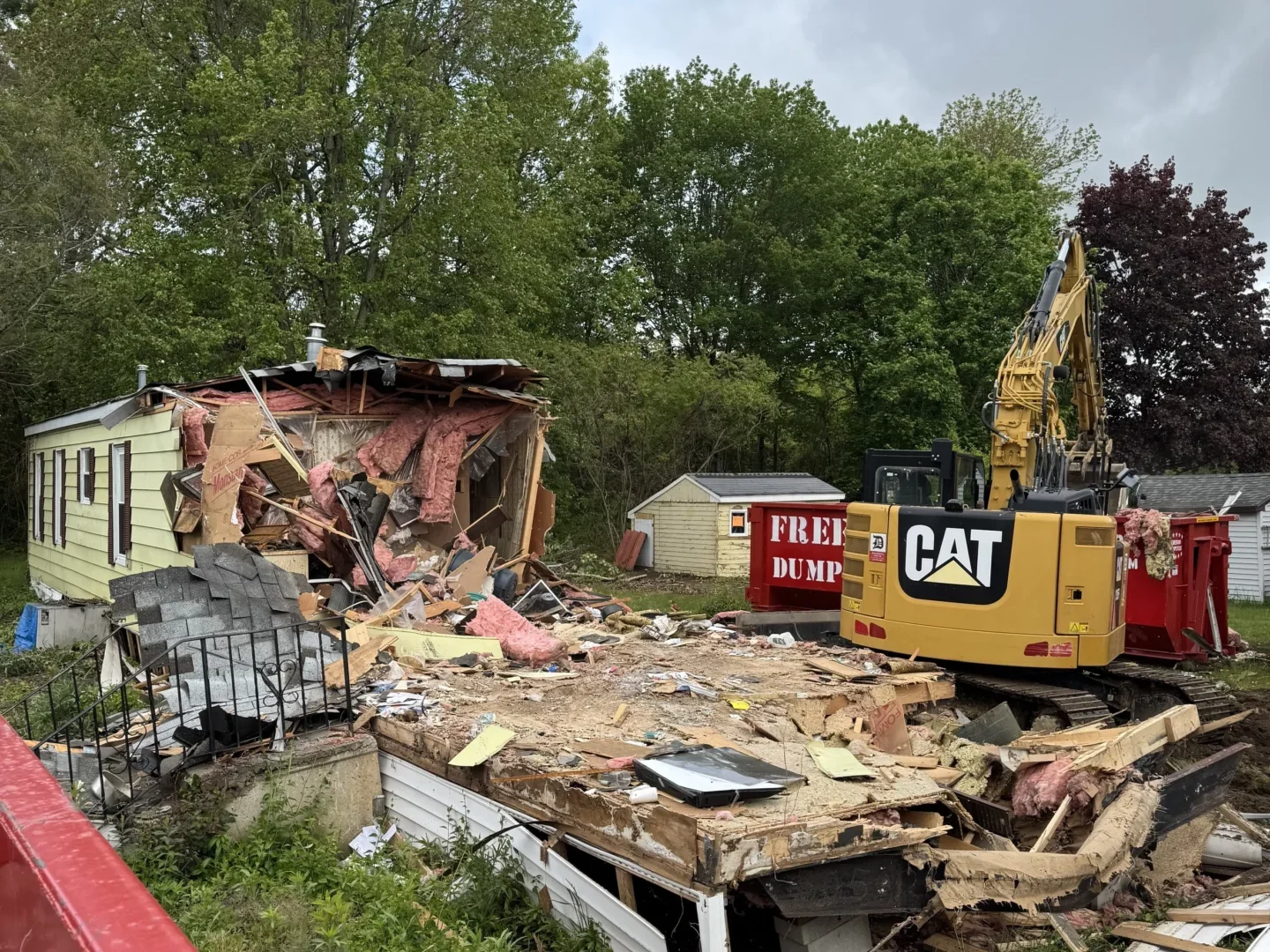
Once the property is properly prepared, the structure can be systematically dismantled or demolished and its materials separated for removal. The exact method depends on the mobile home’s size, construction, foundation, condition, accessibility, and surrounding property.
A demolition company may use appropriate equipment to break down the roof, walls, flooring, framing, and other structural components. The resulting material can include wood, metal, insulation, roofing, fixtures, glass, and other construction debris.
Debris removal is a major part of the job. Instead of leaving the homeowner with piles of material to sort and haul, a full-service demolition contractor can combine demolition with construction debris removal and site cleanup.
This approach is particularly helpful on properties with limited access or nearby homes, sheds, fences, trees, septic components, or other features that need to remain undisturbed.
What Factors Affect a Mobile Home Demolition Project?
The amount of work involved depends on more than the size of the mobile home. Site conditions, hazardous materials, disposal needs, attached structures, and accessibility can all affect the scope of the project.
Important factors include:
- Mobile home size and construction: Larger structures generally create more demolition debris.
- Foundation type: Blocks, slabs, piers, skirting, steps, decks, and other components can add to the work.
- Site accessibility: Tight roads, narrow lots, trees, overhead lines, and neighboring structures may affect equipment access.
- Contents inside the home: Furniture removal, appliance removal, and junk pickup may be needed before structural demolition.
- Hazardous materials: Suspected asbestos or other regulated materials may require inspection and specialized handling.
- Waste disposal: The type and volume of debris affect hauling and disposal requirements.
For homeowners in Southern NH and Northern MA, seasonal conditions can also matter. Frozen ground, snow accumulation, mud, and difficult winter access can influence site preparation and equipment movement, so planning ahead is valuable.
Why Hire a Demolition Company Instead of Handling It Yourself?
Professional mobile home demolition reduces the amount of heavy, hazardous, and logistically complicated work a property owner must coordinate. Demolition involves structural hazards, heavy debris, sharp materials, hauling, disposal, and potentially regulated building materials.
New Hampshire’s Department of Environmental Services specifically advises property owners undertaking renovation or demolition to understand applicable asbestos rules and identifies choosing a reputable, knowledgeable contractor as an important step in managing risk.
Working with a demolition company can also streamline the transition from demolition to cleanup. Instead of arranging separate services for demolition, junk removal, debris removal, and hauling, homeowners can work with a team equipped to handle multiple parts of the cleanup.
For a mobile home that contains unwanted belongings, old appliances, furniture, or accumulated junk, this can make a significant difference in how smoothly the project moves forward.
Mobile Home Demolition FAQ
Can you demolish an old mobile home that contains asbestos?
Potentially, but asbestos must be handled according to applicable regulations. New Hampshire requires asbestos-containing material to be addressed according to its demolition rules, while Massachusetts requires notification for projects involving asbestos abatement, removal, or disposal.
How long does mobile home demolition take?
The physical demolition may be relatively quick for a straightforward project, but the complete timeline also depends on permits or notifications, utility disconnections, hazardous-material requirements, site conditions, demolition, hauling, and final cleanup.
What happens to the debris after a mobile home is demolished?
Demolition debris is loaded, hauled away, and directed to appropriate recycling or disposal facilities based on the type of material and applicable requirements. Materials requiring special handling should be kept within the appropriate regulated waste stream.
Should I remove furniture and appliances before demolition?
Furniture, appliances, household junk, and other loose contents should generally be removed before structural demolition. Using a company that provides junk removal, furniture removal, appliance removal, and demolition services can simplify this stage of the project.
Ready for Mobile Home Demolition in Southern NH or Northern MA?
An old mobile home can leave you with a major cleanup project, but you do not have to coordinate every stage on your own. Petrillo Junk Removal provides professional demolition services and debris removal for property owners throughout Southern New Hampshire and Northern Massachusetts.
Whether you are clearing an aging structure, preparing a property for another use, or simply need dependable help handling a large demolition and cleanup project, our team is ready to help. Contact Petrillo Junk Removal today to discuss your mobile home demolition project.